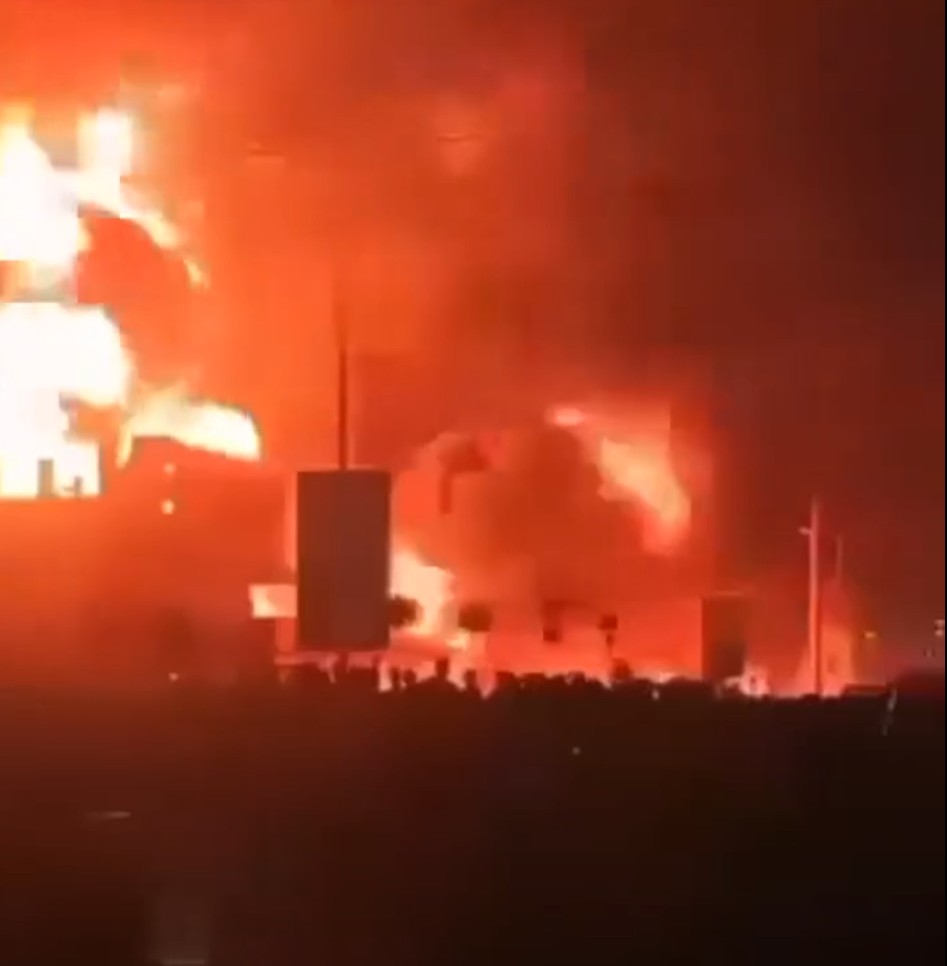
The Middle East entered a dangerous new phase of conflict on June 23, 2025, when Iran launched a missile attack targeting the U.S.-operated Al Udeid Air Base in Qatar. The strike came in direct response to recent U.S. attacks on Iranian nuclear facilities and marked one of the most significant confrontations between the two countries in years.
The attack unfolded during the evening as multiple missiles were launched toward Al Udeid Air Base, one of the United States’ largest military installations in the Middle East. The base, located southwest of Doha, serves as a critical hub for U.S. Central Command’s regional air operations and has long been considered one of America’s most strategically important facilities in the Gulf.
Residents across Doha reported hearing loud explosions while videos shared online showed interceptor missiles lighting up the night sky. Air defense systems operated by the United States and Qatar responded quickly, engaging the incoming missiles before they could cause widespread damage.
Iran’s Islamic Revolutionary Guard Corps (IRGC) quickly claimed responsibility for the operation, describing it as retaliation for U.S. military strikes carried out against Iranian nuclear sites days earlier. Iranian state media portrayed the attack as a measured response intended to demonstrate Tehran’s willingness to retaliate against American military actions in the region.
Qatar’s government strongly condemned the strike, calling it a violation of its sovereignty and airspace. Officials emphasized that the country’s air defense systems, working alongside U.S. forces, successfully intercepted most of the incoming missiles.
According to Qatari authorities, the air base had been evacuated before the missiles arrived, reducing the risk to military personnel stationed there. Officials later confirmed there were no reported deaths or injuries resulting from the attack.
The U.S. military also confirmed that the attack had taken place.
U.S. Central Command praised the coordinated response between American and Qatari forces, stating that Patriot air-defense batteries successfully defeated the missile attack and prevented casualties.
General Michael Erik Kurilla, commander of U.S. Central Command at the time, said the successful defense demonstrated the strength of the long-standing military partnership between the United States and Qatar.
He also warned that American forces would continue defending U.S. personnel and regional partners against future threats.
The attack represented one of the most direct Iranian strikes against American military facilities in recent years.
Military analysts noted that although Iran had previously targeted U.S. positions in Iraq following the 2020 killing of General Qassem Soleimani, striking Al Udeid Air Base carried significant symbolic importance because of the installation’s central role in U.S. military operations throughout the Middle East.
Despite dramatic claims circulating on social media shortly after the attack, officials urged caution.
Many viral posts falsely claimed that the air base had been completely destroyed or that hundreds of casualties had occurred.
Neither claim was supported by official statements.
Instead, U.S. and Qatari authorities consistently reported that defensive systems intercepted most incoming missiles and that no American or Qatari personnel were killed during the attack.
Several weeks later, however, the Pentagon acknowledged that one Iranian ballistic missile had struck the base during the attack, causing limited damage, while the remaining missiles were intercepted. Officials said the impact did not result in casualties and did not significantly affect military operations.
International reaction came quickly.
Governments across Europe and the Middle East expressed concern that direct military exchanges between Iran and the United States could trigger a broader regional conflict.
Airlines temporarily adjusted some flight routes as a precaution while neighboring countries increased security monitoring.
Energy markets also reacted to the uncertainty.
Because the Gulf region plays a vital role in global oil exports, investors closely watched developments for signs that shipping routes or energy infrastructure might be affected.
Although markets experienced short-term volatility, officials continued monitoring the situation for further escalation.
Security experts described the missile attack as carefully calibrated.
While Iran demonstrated its ability to strike a major U.S. installation, the evacuation of the base beforehand and the lack of casualties suggested that both sides were attempting to avoid an immediate, uncontrolled escalation.
Analysts noted that such actions can serve both military and political purposes, allowing governments to demonstrate resolve while limiting the risk of a wider war.
For Qatar, the incident highlighted the difficult position Gulf nations often face during regional conflicts.
Although Qatar maintains close security ties with the United States and hosts Al Udeid Air Base, it has also frequently played a diplomatic role in regional negotiations.
The missile attack placed the country at the center of one of the most significant geopolitical crises of the year.
Military officials have since reviewed the performance of air-defense systems during the attack, emphasizing the importance of coordinated missile defense in protecting military installations and nearby civilian populations.
The incident also renewed discussions about regional security cooperation among Gulf nations and the continued importance of integrated air-defense networks.
While the immediate crisis subsided, tensions between Washington and Tehran remained high.
Diplomatic efforts continued alongside military preparedness as officials sought to prevent additional confrontations that could further destabilize the region.
The events of June 23 served as a reminder of how rapidly long-standing geopolitical disputes can evolve into direct military action.
Although the attack caused widespread concern around the world, the coordinated defensive response and absence of casualties prevented what many feared could become a far more devastating confrontation.
As investigations and military assessments continued, officials stressed the importance of relying on verified information rather than sensational claims circulating online. In moments of international crisis, accurate reporting becomes especially important, helping the public distinguish confirmed developments from speculation and misinformation.