I was never the kind of person people immediately noticed.
Not in the way that turns heads or draws attention without effort. If anything, I was the kind of person who blended into the background so well that most people barely remembered I was there. And over time, that stopped feeling accidental. It became something I learned—something I practiced.
Growing up without financial stability shapes you in ways that aren’t always visible from the outside. You become aware of things other people don’t think twice about—how your clothes compare to others, how confidently you speak, how easily you belong in a room. When those pieces don’t line up, you adapt.
For me, that adaptation looked like silence.
I learned to speak less, observe more, and take up as little space as possible. It wasn’t that I didn’t have thoughts or opinions—I had plenty—but expressing them didn’t feel safe. Attention often came with judgment, and judgment had a way of lingering longer than kindness ever did.
So I became careful.
Careful with my words, careful with my presence, careful not to stand out in ways I couldn’t control.
That was my normal.
Until I met Violet.
She entered my life in such an ordinary way that it almost felt insignificant at the time. One day in chemistry class, she sat down beside me as if it were the most natural decision in the world. No hesitation, no visible calculation—just a simple choice that would end up changing everything for me.
Violet was the kind of person people naturally gravitated toward. She carried herself with confidence that didn’t feel forced, and there was an ease to her presence that made others feel comfortable. She didn’t need to try to be noticed—it simply happened.
In many ways, she represented everything I thought I wasn’t.
But what stood out most wasn’t her confidence or her appearance. It was the fact that she treated me like I belonged.
At first, I assumed it was temporary. A passing interaction. Maybe she hadn’t fully registered who I was yet. But days turned into weeks, and weeks into something more consistent. She talked to me. Asked questions. Listened to my answers.
She didn’t treat me like someone on the margins.
She treated me like a friend.
That shift, small as it might seem, had a profound impact on me. For the first time, I felt like I wasn’t just getting through each day—I was actually experiencing it. Conversations became something I looked forward to. Laughter didn’t feel forced. I started to relax in ways I hadn’t allowed myself to before.
Over time, Violet became more than a friend. She became a constant.
When life at home became complicated and unpredictable, she was there. When I doubted myself, she reminded me of things I couldn’t see on my own. She created a sense of stability that I hadn’t known I needed until I had it.
For years, I believed that kind of connection was unbreakable.
But life has a way of testing even the strongest bonds.
And often, those tests come from places you don’t expect.
By the time I met Rick, I was at one of the lowest points in my life. Maintaining independence had become increasingly difficult. My living situation was unstable—small issues like broken fixtures and unreliable heating turned into constant stress. Expenses kept adding up, and there never seemed to be enough to cover them comfortably.
Every decision carried weight.
Every unexpected cost felt like a setback I couldn’t afford.
There’s a particular kind of pressure that comes from knowing you’re one step away from losing stability entirely. It’s quiet, but constant. It shapes how you think, how you plan, how you move through the world.
That was where I was when Rick noticed me.
He wasn’t like most people I had met. There was a focus to him—an attentiveness that made it clear he was always observing, always evaluating. He didn’t speak unnecessarily, and when he did, his words carried intention.
He had built a successful life for himself, and it showed—not just in material ways, but in how he approached decisions and relationships.
At first, our interactions were simple. Conversations here and there. Nothing that stood out as significant.
But over time, he began to notice things about me that others often overlooked.
He noticed that I didn’t automatically agree with him. That I asked questions when something didn’t make sense. That I valued practical outcomes over appearances.
Eventually, those observations led to something I never could have predicted.
One day, without any buildup or dramatic context, he made me an offer.
“I want you to marry me,” he said.
The words were so direct that they didn’t immediately register. I waited for clarification, assuming there had to be more to it—some explanation that would make the statement make sense.
There was.
But it wasn’t what I expected.
He didn’t speak about emotions or traditional ideas of partnership. Instead, he spoke about trust.
“I trust you,” he said simply. “More than I trust my own family.”
It became clear very quickly that this wasn’t a romantic proposal. It was a practical one.
He was offering stability.
A structured agreement that would provide me with financial security, and in return, I would take on a role that required responsibility and judgment.
It was unexpected, and at first, difficult to process.
When I shared this with Violet, her reaction was immediate—and intense.
She didn’t see the situation the way I did. Where I saw an opportunity to regain stability, she saw something entirely different.
To her, it felt like a betrayal of values, of independence, of everything she believed I stood for.
Her words were sharp, and they stayed with me.
But at that point in my life, I had to make a decision based on reality, not perception.
Stability wasn’t something I could take for granted.
So I said yes.
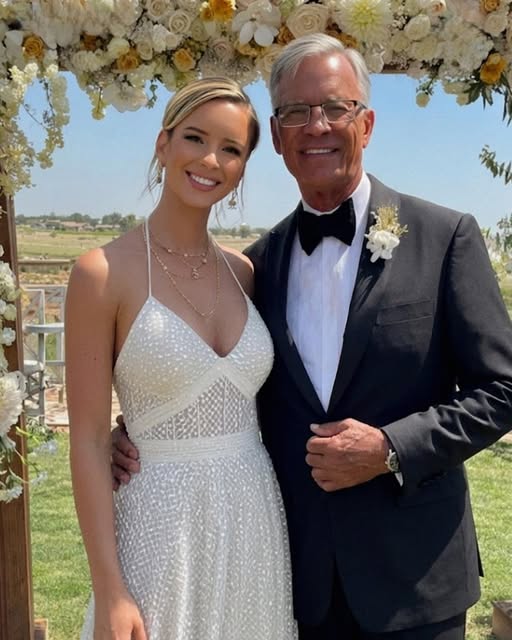
The wedding itself was quiet and understated. There was no elaborate celebration, no sense of excitement filling the room. Instead, there was a noticeable tension—an awareness that this arrangement was unconventional.
Violet attended, but the distance between us was clear. There were no shared glances, no reassuring smiles.
That absence was one of the hardest parts of the entire experience.
After the ceremony, I entered a new environment—Rick’s home, his world—unsure of what to expect.
What I found was not what I had imagined.
That evening, instead of any traditional gestures or expectations, Rick handed me a folder.
Inside were documents, records, and information that painted a much larger picture than I had been aware of.
Then he explained.
His health was declining.
The timeline was uncertain, but limited.
And more importantly, there were ongoing issues within his family that posed a serious risk to everything he had built.
Decisions were being made without his approval. Resources were being redirected. Actions were being taken quietly, under the assumption that they would go unnoticed.
But he had noticed.
And he needed someone he could rely on to address it.
That was the real reason behind his proposal.
He wasn’t looking for companionship.
He was looking for someone he trusted to take responsibility when he no longer could.
In that moment, the situation became clear.
This wasn’t just about stability.
It was about accountability.
And I had just stepped into a role that required more than I had ever been asked to handle before.
The months that followed were challenging in ways I hadn’t anticipated.
Navigating new responsibilities is one thing.
Navigating them in an environment where not everyone welcomes your presence is something else entirely.
Rick’s family made their position clear through their actions. Conversations were tense. Interactions were limited. There was an underlying assumption that my role was temporary.
At first, that uncertainty was difficult.
But over time, something shifted.
I began to understand that their resistance wasn’t about me personally.
It was about control.
They were concerned about losing access to something they had assumed would eventually be theirs.
Once I recognized that, their behavior became easier to interpret—and easier to manage.
Rick’s condition gradually worsened, and with it came an increased sense of urgency.
One evening, a medical emergency brought everything into focus. While I focused on getting him the help he needed, others in the room seemed more concerned with the inconvenience of the situation.
That moment clarified something important for me.
Responsibility isn’t just about authority.
It’s about action.
In his final weeks, Rick gathered everyone together to make his intentions clear.
Despite his condition, his message was direct.
He outlined his decisions, confirmed the structure he had put in place, and made it known that I would be responsible for overseeing key aspects of his work moving forward.
There was visible disagreement.
But there was also documentation—clear, detailed, and prepared in advance.
It became evident that he had anticipated resistance and planned accordingly.
After his passing, the transition period was complex.
There were discussions, challenges, and attempts to reinterpret decisions.
But the groundwork had already been established.
Over time, those challenges were addressed.
Changes were implemented.
And the structure he had created remained intact.
Eventually, things settled into a new normal.
The environment felt different—not empty, but quieter.
More focused.
Violet reached out again after some time had passed.
Our conversation was different from any we had before. There was more understanding, more reflection.
She shared information she had only recently become aware of—details that provided additional context to everything that had happened.
Her perspective had changed.
And so had mine.
We acknowledged that while the past couldn’t be undone, there was room for mutual understanding moving forward.
But we also recognized that growth changes people.
And sometimes, it changes relationships too.
Standing in the position I now held, I realized how much I had changed.
The person I used to be—quiet, hesitant, uncertain—had been shaped by circumstances.
But those circumstances no longer defined me.
Now, when I walk into a room, I don’t look for a place to disappear.
I take my place.
Not out of necessity, but out of confidence.
The stability I once sought gave me something more valuable than security.
It gave me perspective.
And with that perspective came something I hadn’t fully understood before.
Respect isn’t something that’s given automatically.
It’s something built over time—through decisions, through consistency, through the willingness to take responsibility when it matters most.
And once it’s earned, it doesn’t depend on anyone else’s approval.
It stays with you.
And that made all the difference.