The morning had started like any other in the small town of Alder Creek. The sky was pale blue, the kind that promised nothing unusual. Parents hurried their children out of cars in front of the high school, reminding them about homework and practice. Inside, lockers slammed, laughter echoed down the halls, and someone strummed a guitar in the music room before first period.
By 10:17 a.m., that ordinary rhythm shattered.
At first, the sound was confusing—sharp cracks that didn’t belong. Some thought it was construction outside. Others froze when the intercom cut off mid-sentence. Then came the screaming. Teachers moved on instinct, ushering students into classrooms, locking doors, pulling down shades with trembling hands.
In Room 204, Ms. Alvarez gathered her sophomore English class into a corner behind her desk. She counted them twice, then once more, whispering, “Stay quiet. Stay together.” One student, Noah, held his friend’s hand so tightly their knuckles turned white. Another girl, Samira, pressed her forehead to the carpet and silently mouthed a prayer.
Time stretched into something unrecognizable. Minutes felt like hours. Sirens wailed in the distance, growing louder, blending with the pounding of terrified hearts. No one spoke. The air felt heavy, as though even breathing was too loud.
Across the building, chaos unfolded in fragments—shattered glass, abandoned backpacks, a phone ringing unanswered on the floor. But in Room 204, there was only stillness and fear.
When law enforcement finally moved through the halls, their voices were firm but steady. “It’s safe now,” they called. Doors opened cautiously. Students stumbled into the corridor, eyes wide, faces streaked with tears. Some searched frantically for friends. Others simply stood, stunned.
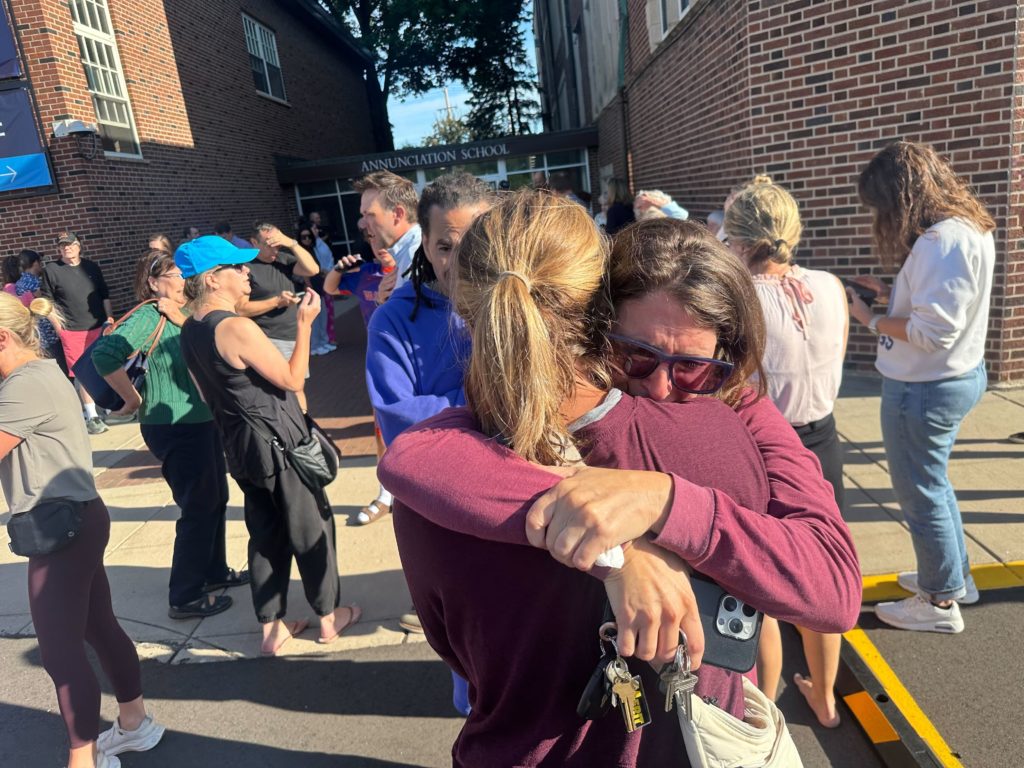
Outside, the parking lot became a sea of flashing lights and frantic parents. Mothers and fathers rushed forward as buses and ambulances lined the street. Names were shouted. Hugs were fierce, desperate, as if holding on could undo what had happened.
By evening, Alder Creek was no longer the same town. The high school sat behind yellow tape. News vans clustered along the sidewalks. Social media filled with disbelief and grief. A vigil was announced at the football field.
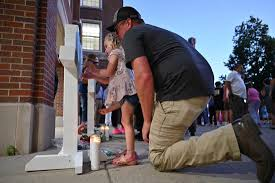
That night, under stadium lights that usually illuminated touchdowns and marching bands, the community gathered in silence. Candles flickered in the cool air. The principal stepped to the microphone, his voice breaking as he spoke about resilience and unity. He read the names of those lost, each one followed by a chorus of whispered “Here.”
Noah stood beside his parents, staring at the rows of candles. He thought about the way the morning had felt so normal, so predictable. He wondered if anything would ever feel that way again.
Samira found Ms. Alvarez in the crowd and wrapped her arms around her teacher. Neither said a word. They didn’t need to.
In the days that followed, counselors filled the library. Classes were suspended. Murals of painted hands and messages of hope covered plywood boards erected around the building. Strangers left flowers at the entrance. Restaurants delivered food to grieving families. Blood drives filled beyond capacity.
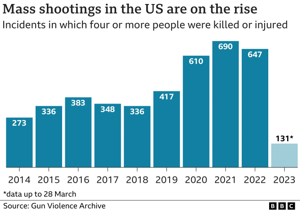
The tragedy left scars—visible and invisible. Some students would struggle with nightmares. Some parents would carry a quiet fear every time they dropped their children at school. But alongside the pain, something else grew: a fierce determination to protect one another, to speak openly about fear and grief, to demand change.
Alder Creek would never return to the innocence of that pale blue morning. Yet in the glow of candlelight and in the clasp of trembling hands, the town found a fragile but enduring truth: even in the darkest hour, they were not alone.