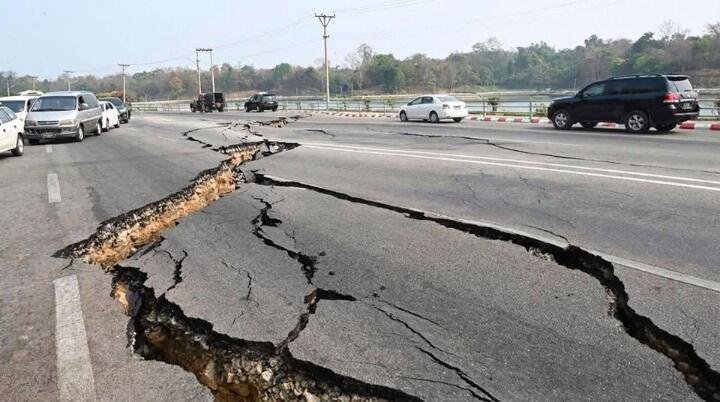
A powerful magnitude 6.5 earthquake struck southern Mexico on Friday, January 2, shaking communities across central and southern regions of the country and resulting in at least two fatalities. The tremor’s epicenter was located near the town of San Marcos in the state of Guerrero, according to initial seismic reports.
The quake was strong enough to be felt hundreds of kilometers away, including in Mexico City, where President Claudia Sheinbaum briefly halted a press conference as safety protocols were activated.
Authorities continue to assess the damage and monitor for aftershocks while emergency crews evaluate affected areas. The incident has once again highlighted Mexico’s ongoing vulnerability to seismic events due to its geographic location within one of the most tectonically active regions in the world.
Immediate Impact in Guerrero
The earthquake originated near San Marcos, a municipality in Guerrero state situated along Mexico’s southern Pacific coast. Guerrero is no stranger to seismic activity, but Friday’s event caused significant alarm due to its strength and the intensity of shaking in populated areas.
Officials confirmed that at least two individuals lost their lives in connection with the earthquake.
One of the victims was a 60-year-old man who reportedly experienced a medical emergency while evacuating his residence during the tremors. Authorities stated that he collapsed as residents were being moved outside for safety.
The second fatality involved a 50-year-old woman who lived near the quake’s epicenter. According to local reports, structural damage to her home caused debris to fall, resulting in fatal injuries.
Emergency personnel responded quickly, conducting building inspections and assisting residents who had evacuated their homes.
Damage to Infrastructure
Beyond the tragic loss of life, infrastructure damage was reported in several locations throughout Guerrero.
In Chilpancingo, the capital of Guerrero state, a hospital sustained structural damage during the earthquake. Health officials evacuated certain patients as a precaution while engineers assessed the building’s integrity.
Hospitals are often among the most critical facilities during natural disasters. Ensuring their structural safety is a priority because they serve as central hubs for emergency response and medical treatment.
While reports indicate that damage was limited in some areas, assessments are ongoing. Engineers are inspecting schools, government buildings, and residential complexes to determine whether additional evacuations are necessary.
Tremors Felt in Mexico City
Although the epicenter was located approximately 400 kilometers from Mexico City, the earthquake was felt strongly in the capital.
Mexico City is home to more than 20 million people in its greater metropolitan area, making any significant tremor a serious concern.
President Claudia Sheinbaum was addressing members of the press at the time the quake struck. As the building began to shake, the press conference was interrupted to follow established safety procedures.
Officials temporarily evacuated the presidential palace as alarms sounded. Shortly afterward, authorities confirmed that no significant damage had occurred in the immediate vicinity, and the press conference resumed.
The brief interruption demonstrated how seriously earthquake preparedness is treated at all levels of government in Mexico.
Mexico’s Geographic Vulnerability
Mexico’s frequent seismic activity is directly tied to its geological position. The country sits within the Pacific Ring of Fire, one of the most active earthquake and volcanic zones on the planet.
Several tectonic plates converge in this region, including:
- The Cocos Plate
- The North American Plate
- The Pacific Plate
- The Rivera Plate
- The Caribbean Plate
The movement and interaction of these plates generate stress beneath the Earth’s surface. When that stress is released, it produces earthquakes.
Guerrero, located along Mexico’s Pacific coastline, lies particularly close to subduction zones where one tectonic plate slides beneath another. These areas are known for producing powerful seismic events.
Why Mexico City Is Especially Vulnerable
Although Mexico City is not directly on the coast, it remains highly susceptible to earthquake damage due to unique geological conditions.
The capital was built on what was once Lake Texcoco, a large ancient lake that was gradually drained during colonial times. As a result, much of the city rests on soft, water-saturated clay soil.
This soft soil can amplify seismic waves, making tremors feel stronger and last longer compared to areas built on solid bedrock.
Even earthquakes centered hundreds of kilometers away can cause noticeable shaking in the capital.
This phenomenon has influenced Mexico’s building codes and emergency preparedness strategies over the decades.
Historical Context: Mexico’s Most Devastating Earthquakes
Friday’s magnitude 6.5 quake, while serious, was far less destructive than some of Mexico’s past seismic disasters.
The 1985 Mexico City Earthquake
On September 19, 1985, an 8.1 magnitude earthquake struck off Mexico’s Pacific coast. The event remains one of the most devastating natural disasters in the country’s history.
The quake caused widespread destruction in Mexico City, leading to the collapse of hundreds of buildings. Estimates indicate that approximately 10,000 people lost their lives, though some unofficial figures suggest the number may have been higher.
The tragedy prompted sweeping reforms in building regulations, emergency response systems, and urban planning policies.
The 2017 Earthquake
Exactly 32 years later, on September 19, 2017, another powerful earthquake struck central Mexico. With a magnitude of 7.1, the quake caused severe damage across multiple states.
More than 300 people were killed, and thousands of buildings were damaged or destroyed.
The coincidence of the date — September 19 — intensified public anxiety, as many residents were already participating in annual earthquake preparedness drills commemorating the 1985 disaster.
Emergency Response and Preparedness
Mexico has developed one of the most advanced earthquake early warning systems in the world.
The Mexican Seismic Alert System (SASMEX) uses sensors positioned along the Pacific coast to detect strong tremors and provide seconds of warning before shaking reaches urban centers.
In Mexico City, loudspeakers installed throughout neighborhoods broadcast alert tones when seismic activity is detected. These precious seconds allow residents to seek safer locations and follow evacuation procedures.
During Friday’s earthquake, warning systems were activated in several areas, giving people time to respond.
Preparedness drills are conducted regularly in schools, offices, and government institutions.
Aftershocks and Ongoing Monitoring
Following a significant earthquake, aftershocks are common.
Seismologists explain that aftershocks occur as the Earth’s crust continues to adjust following the release of tectonic stress. These smaller quakes can sometimes cause additional structural damage, particularly to buildings already weakened by the initial event.
Authorities are continuing to monitor seismic activity in Guerrero and surrounding states. Residents have been advised to remain alert and follow official guidance.
Public Reaction and Community Response
In the hours following the earthquake, social media platforms filled with posts from residents sharing their experiences.
Many described strong shaking, swaying buildings, and temporary power outages. Others expressed relief that the damage appeared less severe than initially feared.
Community members in Guerrero organized informal support networks, checking on elderly neighbors and assisting those whose homes sustained damage.
Moments like these often reinforce the importance of solidarity during natural disasters.
Building Codes and Structural Resilience
Since the catastrophic earthquake of 1985, Mexico has significantly strengthened its construction regulations.
Modern building codes require structures — particularly high-rise buildings — to meet rigorous seismic resistance standards.
Newer buildings in Mexico City and other major urban centers are designed to sway during earthquakes rather than collapse.
Engineers use shock absorbers, flexible foundations, and reinforced concrete frameworks to reduce structural risk.
While no system can eliminate all danger, these advancements have contributed to improved survival rates during recent earthquakes.
The Economic Impact of Earthquakes
Even moderate earthquakes can produce economic consequences.
Potential impacts include:
- Temporary business closures
- Infrastructure repair costs
- Medical expenses
- Housing displacement
Local governments often coordinate with federal agencies to provide financial assistance and disaster relief funds when necessary.
The full economic impact of Friday’s earthquake will become clearer after damage assessments are completed.
Climate, Urban Growth, and Risk Management
Rapid urban growth in parts of Mexico has added complexity to disaster management efforts.
Expanding housing developments, aging infrastructure, and informal settlements can increase vulnerability if not constructed according to updated building codes.
Authorities continue to emphasize the importance of urban planning that accounts for seismic risk.
Investment in resilient infrastructure remains a national priority.
Public Health Considerations
Natural disasters can also affect public health.
Hospitals must maintain emergency power systems and evacuation protocols. In Chilpancingo, precautionary evacuations were conducted after structural damage was observed at a medical facility.
Ensuring patient safety during seismic events requires coordination between medical staff, emergency responders, and structural engineers.
Mental health support may also become necessary after traumatic events, particularly in regions that have experienced previous major disasters.
Lessons From Past Tragedies
Mexico’s experience with major earthquakes has shaped its approach to preparedness.
The 1985 disaster prompted citizen-led rescue efforts that eventually evolved into formalized emergency response organizations.
Public awareness campaigns encourage residents to prepare emergency kits, identify safe zones within buildings, and practice evacuation routes.
These lessons remain vital as seismic risk continues.
The Science of Earthquake Measurement
Earthquakes are measured using the moment magnitude scale (Mw), which replaced the older Richter scale for large events.
A magnitude 6.5 earthquake is considered strong. It has the potential to cause significant damage in populated areas, particularly near the epicenter.
Each whole number increase on the magnitude scale represents approximately 32 times more energy release.
While Friday’s quake was powerful, it released far less energy than the catastrophic 8.1 magnitude event in 1985.
The Importance of Early Warning Systems
Early warning systems cannot predict earthquakes in advance. However, they can detect the initial seismic waves and provide brief alerts before stronger shaking begins.
Even a 10- to 20-second warning can allow:
- Elevators to stop at the nearest floor
- Surgeons to pause procedures
- Schools to implement safety drills
- Individuals to move away from windows
Mexico’s investment in such systems has become a model for other earthquake-prone countries.
Looking Ahead
As authorities continue investigating the impact of the January 2 earthquake, attention will focus on:
- Structural inspections
- Community recovery
- Support for affected families
- Continued seismic monitoring
Officials have not indicated whether additional casualties are expected, but assessments are ongoing.
Conclusion
The magnitude 6.5 earthquake that struck near San Marcos, Guerrero, serves as another reminder of Mexico’s geological reality.
While the loss of two lives is deeply tragic, the event also highlights the country’s preparedness efforts and improved infrastructure compared to previous decades.
From strengthened building codes to advanced early warning systems, Mexico continues to adapt to its seismic environment.
Earthquakes cannot be prevented. But through vigilance, preparedness, and community resilience, their impact can be reduced.
As recovery efforts continue, authorities remain committed to ensuring public safety and monitoring ongoing seismic activity.