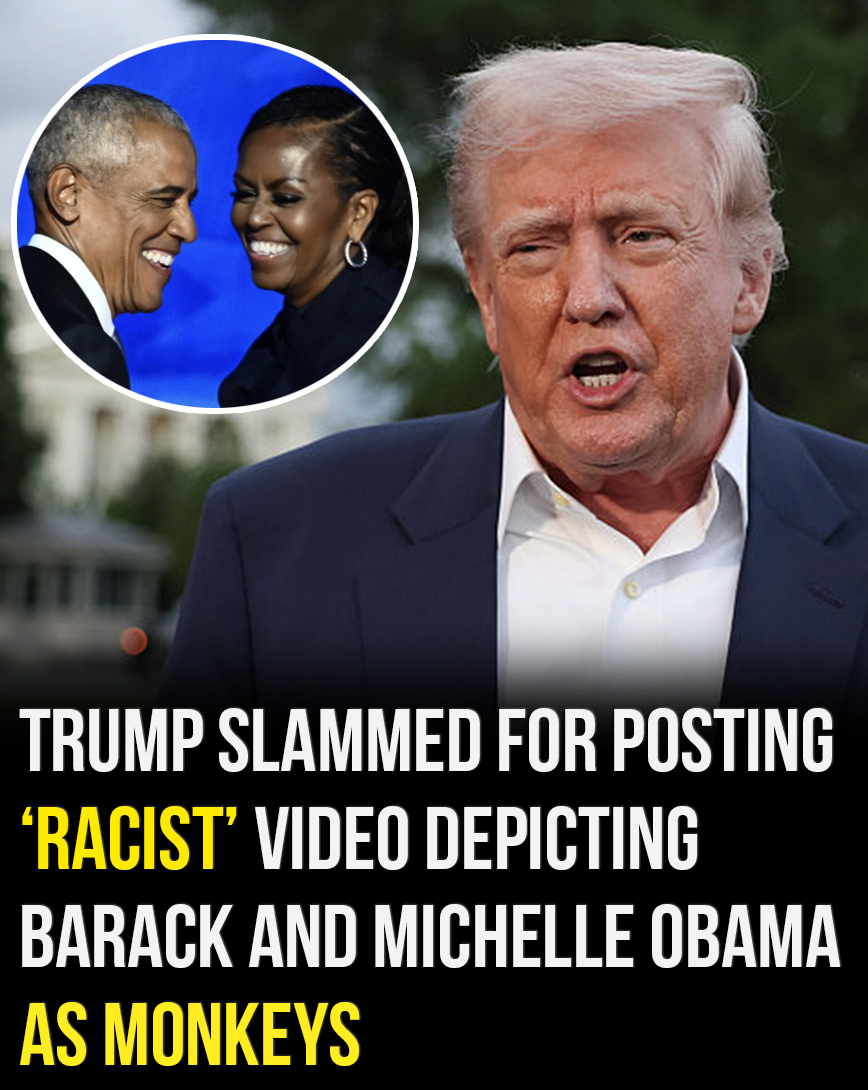
The video, tucked inside a barrage of more than 60 Truth Social posts, did far more than simply recycle long-debunked election conspiracies. It struck a raw and deeply emotional nerve within American public life, reopening wounds tied to race, political division, and the evolving role of social media in shaping national discourse. For many observers, the content of the post crossed a line that political commentary, even in its harshest forms, had struggled to avoid. The image of former President Barack Obama and former First Lady Michelle Obama portrayed as monkeys was not viewed by critics as a harmless or tasteless joke. Instead, it was interpreted as a deliberate invocation of one of the most offensive and historically loaded racist tropes in United States history.
That imagery carries a painful legacy. For centuries, Black Americans have been dehumanized through comparisons to animals, a tactic used to justify discrimination, segregation, and violence. Historians and cultural commentators quickly pointed out that such depictions are not accidental or culturally neutral; they are deeply embedded in a long tradition of racial caricature meant to strip dignity and reinforce harmful stereotypes. In that context, many critics argued that the video’s inclusion in a prominent political figure’s social media activity could not simply be dismissed as careless humor or edgy satire. Instead, they viewed it as confirmation of concerns that have followed Donald Trump throughout his political career, including accusations of racially insensitive rhetoric and behavior.
Public backlash was swift and intense. Political analysts, civil rights advocates, and prominent public figures condemned the post, labeling it as “vile,” “overt racism,” and a new moral low for a man who continues to hold significant influence within American politics. For those critics, the controversy served as another example of how inflammatory messaging can deepen social divisions and normalize offensive rhetoric in the public sphere. They argued that when such content appears to go unchallenged or is framed as entertainment, it risks lowering standards of political discourse and reinforcing existing cultural tensions.
However, the response to the video also revealed the persistent and widening political divide across the country. While some former supporters of Trump expressed discomfort and publicly distanced themselves, others quickly rallied in his defense. Supporters often dismissed the backlash as exaggerated or politically motivated, referring to the outrage as “fake” or manufactured by political opponents and mainstream media outlets. Some framed the video as part of a broader tradition of aggressive political satire, arguing that both major parties have engaged in sharp or controversial portrayals of opponents in the past.
The White House and Trump allies attempted to characterize the content as harmless internet culture, suggesting that critics were overanalyzing a meme-style post common in online spaces. They argued that social media frequently includes exaggerated, offensive, or provocative material intended to entertain or provoke reaction rather than serve as literal political messaging. Yet, millions of Americans saw something far more troubling. For them, the issue was not just about one post or one video but about the broader tone of political communication in the digital age, where viral content can spread rapidly and shape public perception before fact-checking or thoughtful discussion can occur.
Amid the controversy, Barack and Michelle Obama chose not to publicly respond. Their silence, however, became a subject of its own discussion. Supporters interpreted their lack of response as a dignified refusal to engage with what they viewed as inflammatory and disrespectful content. Others speculated that remaining silent allowed the controversy to speak for itself, preventing further escalation while maintaining the Obamas’ public image as figures who seek to rise above political mudslinging.
Ultimately, the incident highlights deeper questions about leadership, accountability, and the influence of social media on public life. It underscores how a single viral post can ignite national debate, revealing fractures in how Americans interpret humor, political messaging, and racial sensitivity. Whether viewed as offensive propaganda, tasteless satire, or exaggerated online culture, the reaction demonstrates how political figures’ digital behavior now carries enormous weight, capable of shaping conversations far beyond the platform where the content first appeared.