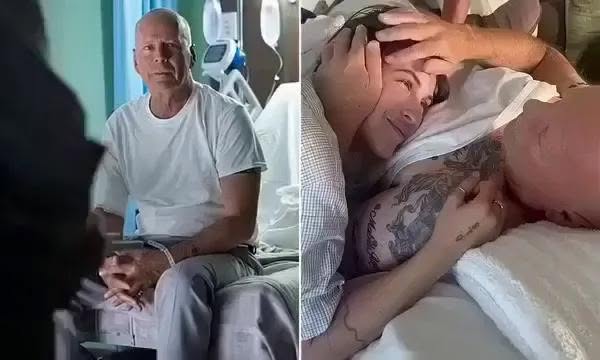
For decades, Bruce Willis was one of Hollywood’s most recognizable stars.
From action films and dramas to comedies and memorable television appearances, he built a career that spanned generations and earned him fans around the globe. Whether audiences knew him as the wisecracking hero of the Die Hard series, the mysterious psychologist’s patient in The Sixth Sense, or through dozens of other roles, Bruce Willis became a familiar face in entertainment for more than forty years.
In recent years, however, the actor’s life has taken a very different turn.
Since 2022, Bruce Willis and his family have shared difficult updates regarding his health, opening a deeply personal chapter that has brought widespread support from fans, fellow actors, and people affected by similar conditions.
In March 2022, Bruce Willis’s family announced that he would be stepping away from acting after being diagnosed with aphasia, a disorder that affects a person’s ability to communicate. Aphasia can impact speech, understanding language, reading, and writing, making everyday communication increasingly challenging.
The announcement came as a surprise to many fans.
For years, Bruce Willis had been known for his confidence, humor, and commanding presence on screen. Learning that he was experiencing a condition affecting communication led many people to reflect on the realities that can face anyone, regardless of fame or success.
Less than a year later, in February 2023, Bruce’s family shared another update.
Doctors had determined that his condition had progressed and that he had received a diagnosis of frontotemporal dementia, often referred to as FTD.
Frontotemporal dementia is a group of disorders caused by progressive damage to the frontal and temporal regions of the brain. These areas are associated with personality, behavior, language, decision-making, and communication.
Unlike Alzheimer’s disease, which is more commonly associated with memory loss, frontotemporal dementia can first appear through changes in behavior, language difficulties, emotional responses, and communication challenges.
Medical experts note that FTD is relatively rare compared to other forms of dementia, but it can have profound effects on both individuals and their families.
Bruce Willis’s family has been open about the difficulties of navigating this diagnosis while also expressing gratitude for the support they have received.
His wife, Emma Heming Willis, former wife Demi Moore, and his daughters have frequently shared messages emphasizing love, unity, and appreciation for the many people who have offered encouragement.
One aspect that many people found moving was the way the family came together.
Despite divorce and the passing of years, Bruce’s extended family has continued supporting one another during this difficult period.
Photographs and messages shared publicly have shown family members spending time together, celebrating special occasions, and creating meaningful moments.
For many observers, these moments served as reminders of the importance of family support when facing serious health challenges.
Emma Heming Willis has also become an advocate for caregivers, speaking openly about the emotional demands placed on family members who help loved ones living with dementia-related conditions.
She has emphasized the importance of seeking support, sharing experiences, and recognizing that caregivers also need care and understanding.
Bruce Willis’s diagnosis has brought greater public awareness to frontotemporal dementia.
Before the family shared his condition, many people had never heard of FTD.
Medical organizations have since reported increased interest in understanding the disease, its symptoms, and the challenges it creates for patients and families.
Experts explain that neurodegenerative conditions often progress gradually over time.
Symptoms can vary significantly between individuals, making every experience unique.
Researchers continue working to better understand these diseases while developing treatments and support strategies aimed at improving quality of life.
Throughout his career, Bruce Willis built an extraordinary legacy.
He appeared in more than one hundred films and television projects, becoming one of the most successful actors of his generation.
The Die Hard films transformed action cinema, while performances in movies such as Pulp Fiction, 12 Monkeys, Armageddon, The Fifth Element, Looper, and The Sixth Sense demonstrated his versatility.
Fans admired not only his acting but also his ability to balance action, humor, and emotional depth.
His performances entertained millions of people across different countries and generations.
Even as his health challenges have become more widely known, many people continue celebrating the body of work he created throughout his long career.
Social media often fills with messages from fans sharing favorite scenes, memorable lines, and stories about how his films influenced their lives.
For some, Bruce Willis represents a certain era of cinema.
For others, he is a reminder of family movie nights, unforgettable action films, or performances that left lasting impressions.
The response to his diagnosis has also highlighted the universal nature of illness.
Health challenges can affect anyone, regardless of profession, success, or public recognition.
Many families around the world are navigating similar experiences, caring for loved ones facing dementia and other neurological conditions.
Bruce Willis’s family’s openness has helped many people feel less alone.
Their willingness to discuss difficult realities has brought greater attention to frontotemporal dementia while encouraging conversations about caregiving, compassion, and support.
Medical researchers continue searching for improved treatments and a deeper understanding of neurodegenerative diseases.
Advocacy organizations also continue working to provide resources for patients and families.
For now, Bruce Willis’s story remains one of resilience, family unity, and the importance of compassion during life’s most difficult moments.
Although his health journey has been challenging, the love surrounding him has been clear.
Fans around the world continue sending messages of support, remembering not only the actor they watched on screen but also the person behind those performances.
Bruce Willis’s legacy extends far beyond movies.
It includes decades of entertainment, unforgettable characters, and now, a powerful reminder of the strength found in family, kindness, and human connection.
As millions continue following his journey, many hope that increased awareness of frontotemporal dementia will lead to greater understanding, more research, and better support for all those affected by similar conditions.
And while Bruce Willis may no longer appear on movie screens, the impact of his work—and the admiration people feel for him—continues to endure.