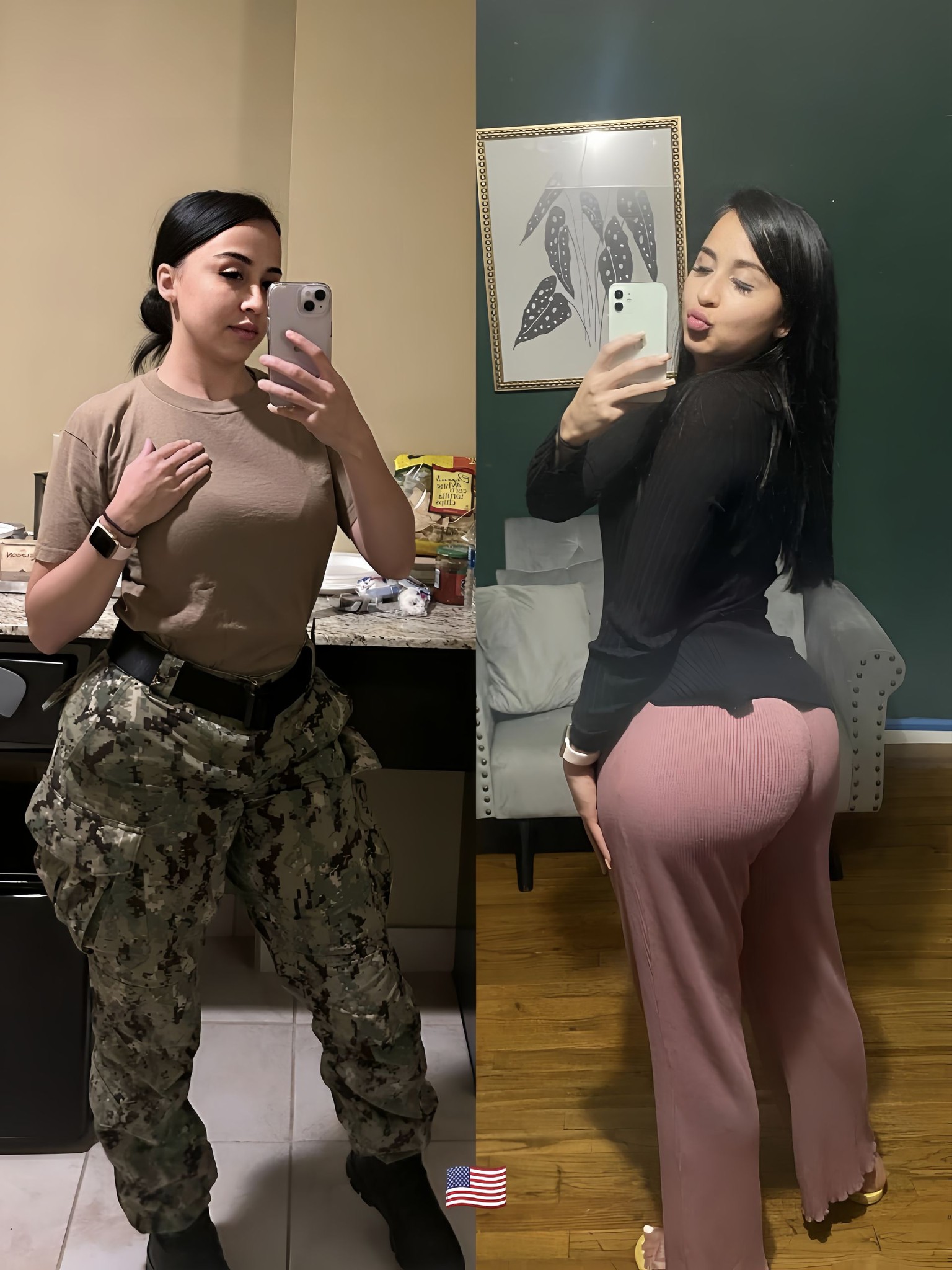
From the moment she put on the uniform, Camila felt a sense of pride.
It wasn’t just a job—it was a commitment. Early mornings, long drills, discipline, structure. She embraced all of it. She wanted to prove herself, to be respected as part of the team.
But very quickly, she noticed something else.
Attention.
Not the kind that came from her work ethic or performance—but the kind that followed her before she even said a word.
At first, she brushed it off.
A comment here. A joke there. Nothing too serious—at least, that’s what she told herself. The military environment was intense, and humor was often part of how people coped.
But it didn’t stop.
If anything, it became more frequent.
“You must get all the attention around here,” someone said one afternoon, half-joking.
Camila forced a small smile. “I’m just here to do my job.”
But that didn’t seem to matter to everyone.
Some people treated her differently from the start. Conversations would shift in tone. Simple interactions sometimes carried an edge she didn’t ask for. It wasn’t always obvious—but it was constant enough that she couldn’t ignore it.
And the hardest part?
It made her feel like she had to work twice as hard.
Not just to succeed—but to be taken seriously.
During training exercises, she pushed herself further than most. She stayed focused, followed orders, and delivered results. She wanted her performance to speak louder than anything else.
And it did—for some.
But not for everyone.
There were moments that stuck with her.
Comments that crossed the line just enough to make her uncomfortable, but not always enough to call out easily. Looks that lingered too long. Assumptions made before people even got to know her.
It was exhausting.
Not because she couldn’t handle pressure—but because it wasn’t the kind of pressure she signed up for.
One evening, after a long day, she sat with a fellow soldier she trusted.
“Does it ever stop?” she asked quietly.
He looked at her, understanding more than she expected. “Not completely,” he admitted. “But people learn—especially when you don’t let it slide.”
That stuck with her.
From that point on, she started setting clearer boundaries.
If someone made a comment that felt off, she addressed it—calmly but firmly. If someone underestimated her, she proved them wrong through action. She stopped laughing things off just to keep the peace.
And slowly, things began to shift.
Not overnight—but enough.
People started recognizing her for what actually mattered. Her discipline. Her consistency. Her ability to perform under pressure.
Her presence.
It didn’t mean the attention disappeared completely.
But it changed.
Because she changed how she responded to it.
She realized something important:
Respect isn’t given automatically—it’s enforced through how you carry yourself, how you respond, and what you refuse to tolerate.
Being a Latina woman in the military came with challenges she hadn’t fully expected.
But it also gave her strength.
Strength to stand her ground. Strength to demand respect. Strength to be seen for who she truly was—not what others assumed.
At the end of the day, she didn’t want to be the one everyone noticed.
She wanted to be the one everyone respected.
And she was willing to earn that—on her own terms.