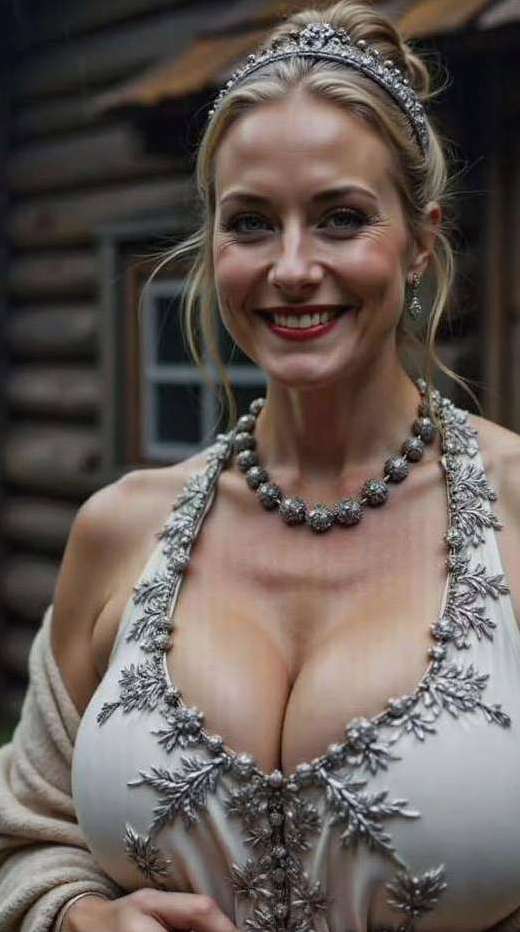
Vivian had spent most of her life moving with intention. Every decision, every relationship, every risk she allowed herself to take had been carefully measured. By the time she reached 62, she carried not only wisdom but also the quiet weight of experiences—love that had once felt certain, and losses that had reshaped her understanding of what it meant to truly live.
In her younger years, Vivian believed stability was the ultimate achievement. She chose a career that promised security, married a man who offered consistency, and built a life that, from the outside, appeared steady and complete. There had been love, yes, but it was a love rooted in routine rather than passion. Over time, she convinced herself that this was enough—that happiness didn’t need to be loud or unpredictable, only dependable.
But life, as she would come to learn, rarely follows the neat lines we draw for it.
Her husband’s passing at 54 marked the first time her carefully structured world cracked open. Grief did not arrive in the way she had expected. It was not always loud or consuming; often, it was subtle—a quiet absence at the dinner table, the echo of footsteps that no longer filled the house, the unbearable stillness of evenings that stretched endlessly. In those moments, she realized how much of her life had been shared, and how little she knew of herself alone.
The years that followed were not easy. There were days when she moved through the world like a shadow of who she once was, completing tasks out of habit rather than desire. Friends encouraged her to “move on,” but the phrase felt hollow. Move on to what? she would wonder. The life she had known was gone, and the future felt like an uncharted territory she wasn’t sure she had the strength to explore.
Yet, slowly, something within her began to shift.
It started with small choices—ones she would have once dismissed as unnecessary risks. She signed up for a painting class, despite having no artistic background. She traveled alone for the first time, choosing a quiet coastal town where no one knew her name. She allowed herself to sit in unfamiliar cafes, to strike up conversations with strangers, to exist without the expectations that had once defined her.
At first, these moments felt uncomfortable, even indulgent. But over time, they became something more. They became freedom.
Vivian began to understand that intention did not have to mean control. For so long, she had equated careful planning with safety, believing that if she measured every step, she could avoid pain. But pain, she realized, was not something to be avoided—it was something to be experienced, learned from, and ultimately, survived.
In embracing uncertainty, she discovered a different kind of strength. One that did not rely on predictability, but on resilience.
By the time she reached 62, Vivian was no longer the woman who needed every detail of her life to be carefully arranged. She still moved with intention, but now that intention came from a place of curiosity rather than fear. She allowed herself to feel deeply, to take chances, to open her heart in ways she once thought were too dangerous.
One evening, as she stood by the shore watching the sun sink into the horizon, she felt a quiet sense of peace settle within her. Not the kind that comes from having all the answers, but the kind that comes from accepting that some questions may never be fully resolved.
For the first time in her life, Vivian wasn’t trying to control the path ahead. She was simply walking it—step by step, moment by moment—trusting that wherever it led, she would find her way.
And in that surrender, she discovered something unexpected.
Not just the courage to keep going, but the courage to truly begin again.