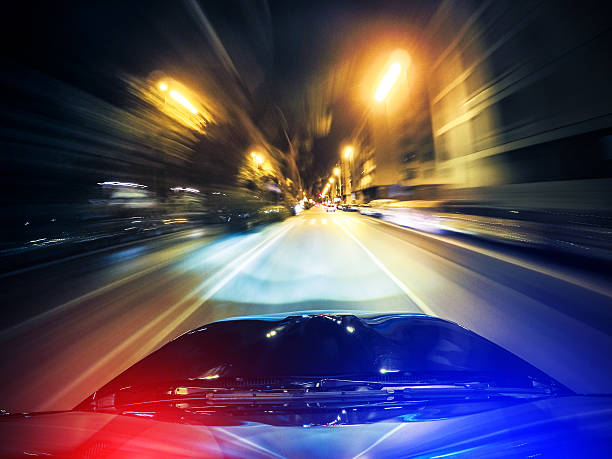
The footage opens in near darkness, illuminated only by distant flashes of red and blue reflecting off wet brick walls. The timestamp in the top corner reads 02:14:33 AM. The view is unmistakably first-person—wide-angle, slightly distorted at the edges, the kind of visual signature associated with a chest-mounted body camera.
Heavy boots echo against concrete as the officer advances slowly into a narrow back alley. Trash bags rustle faintly in the breeze. A large green dumpster dominates the right side of the frame, its metal surface flickering under intermittent police strobes spilling in from the street beyond.
“Show me your hands!” the officer commands, voice firm but controlled.
The camera tilts slightly, adjusting. A figure comes into view—crouched low behind the dumpster, partially concealed in shadow. A Caucasian male, late 20s. Short buzz-cut hair. Dirty white tank top clinging to his torso. Baggy blue jeans darkened around the knees from damp pavement. Black sneakers braced against the concrete.
He’s breathing hard.
Even through the low-resolution digital noise, his chest can be seen rising and falling rapidly. Sweat beads along his forehead and runs down the side of his face, catching flashes of blue light. A small scar is visible on his right cheek whenever the strobes hit just right.
“I’m not armed!” he blurts out, voice shaky.
The officer moves closer. The fish-eye lens exaggerates distance, making the space between them feel warped and tense. Subtle camera shake mirrors the officer’s measured steps. Gear shifts softly with each movement.
“Hands! Now!” the officer repeats.
The suspect slowly lifts his hands from his knees. They tremble slightly in the harsh, flickering light. His eyes are wide—alert, calculating, but also afraid. He glances briefly toward the alley entrance, as if measuring the odds of escape, then back toward the lens.
Red. Darkness. Blue. Darkness.
Each strobe creates a momentary freeze-frame of his expression: fear, exhaustion, resignation.
The alley itself feels claustrophobic. Brick walls rise on both sides, graffiti partially visible between shadows. Puddles reflect fractured colors from patrol lights outside the alley mouth. The metallic scent of trash and wet concrete seems almost tangible through the audio—subtle drips, distant sirens, and the faint hum of an idling cruiser.
“Stand up slowly,” the officer instructs.
The suspect nods and carefully rises from his crouched position. His movements are deliberate but unsteady. The camera angle dips slightly upward as the officer closes the gap, maintaining a dominant position. The wide lens captures every detail—the strain in the suspect’s jaw, the damp fabric of his tank top, the way his shoulders tense with each breath.
“I wasn’t trying to run,” he says quickly. “I just— I panicked.”
His voice cracks.
The officer steps within arm’s reach. The frame fills with the suspect’s upper body, the heavy barrel distortion making the moment feel invasive and immediate. The flashing lights intensify as another patrol unit pulls closer to the alley entrance, sending brighter strobes cascading down the narrow corridor.
“Turn around. Hands behind your back,” the officer says.
The suspect complies. Fingers interlock behind his head before sliding downward as instructed. His breathing remains audible—deep, uneven pulls of air.
Metallic clicks break through the tension as handcuffs are secured.
For a few seconds, no one speaks. Only sirens in the distance and the soft hum of the city at night.
What began as a hidden figure crouched behind a dumpster ends with controlled restraint under flashing lights. The alley, moments ago a place of concealment, is now fully exposed.
But what drove him into hiding in the first place?
The full bodycam footage reveals what happened just minutes earlier.