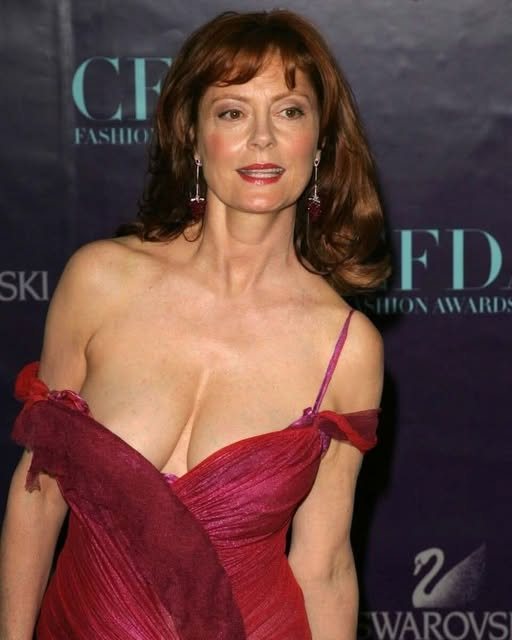
Susan Sarandon stands as one of the most enduring and influential figures in the history of American cinema. Her presence in Hollywood has never been limited to her undeniable acting talent alone; rather, it is her fearless individuality, unwavering self-belief, and refusal to conform that have cemented her legacy as a cultural icon. Across decades of professional success and public scrutiny, Sarandon has consistently challenged conventions surrounding beauty, aging, femininity, and power—particularly as they relate to women in the entertainment industry. Her life and career serve as a powerful testament to the idea that authenticity, when embraced fully, can become a radical act.
From the outset of her career, Sarandon demonstrated a willingness to take risks and defy expectations. Born in 1946, she entered the acting world at a time when rigid standards governed how women were expected to look, behave, and age—especially in Hollywood. Yet Sarandon never seemed interested in fitting neatly into those predetermined boxes. Instead, she carved out a space for herself that was bold, complex, and unapologetically her own. This approach would come to define not only her professional choices but also her public persona.
Her breakout role came in 1975 with The Rocky Horror Picture Show, a film that would later achieve cult status and redefine how audiences understood musical cinema, sexuality, and gender expression. Sarandon’s portrayal of Janet Weiss was pivotal to the film’s success. At a time when mainstream cinema rarely embraced themes of sexual liberation or self-discovery with such openness, Sarandon helped bring a character to life who evolves from innocence to empowerment. Though the film initially received mixed reviews, it went on to become one of the most beloved cult classics of all time, and Sarandon’s performance remains central to its enduring appeal.
Following The Rocky Horror Picture Show, Sarandon continued to build an impressive body of work, choosing roles that allowed her to explore emotionally rich, complex characters. Rather than pursuing conventional leading-lady roles designed solely to capitalize on physical beauty, she gravitated toward stories that carried emotional weight and social relevance. This approach paid off, as she steadily earned critical acclaim for performances that demonstrated both vulnerability and strength.
One of her most celebrated roles came in 1991 with Thelma & Louise, a film that has since become a landmark in feminist cinema. Playing Louise, a woman pushed to the edge by systemic injustice and personal trauma, Sarandon delivered a performance that was both raw and deeply human. The film challenged traditional narratives about women’s roles, autonomy, and friendship, and it sparked widespread conversations about gender dynamics in society. Sarandon’s work in Thelma & Louise earned her an Academy Award nomination for Best Actress, further solidifying her reputation as one of the most formidable talents of her generation.
Her crowning professional achievement arrived in 1995 with Dead Man Walking, a film that addressed the moral complexities of capital punishment. Sarandon’s portrayal of Sister Helen Prejean was nothing short of transformative. She approached the role with empathy, nuance, and profound emotional intelligence, offering a deeply human perspective on a deeply divisive issue. The performance earned her the Academy Award for Best Actress, an honor that recognized not only her talent but also her commitment to socially conscious storytelling.
While Sarandon’s acting career alone would be enough to secure her place in cinematic history, her influence extends far beyond the screen. She has long been known as an outspoken advocate for social justice, political engagement, and personal autonomy. Whether addressing issues related to human rights, gender equality, or body positivity, Sarandon has never shied away from using her platform to voice her beliefs. Importantly, she does so without seeking approval or attempting to soften her message for mass appeal.
Central to Sarandon’s public image is her steadfast embrace of individuality. She has consistently rejected the notion that women must diminish themselves to remain acceptable, particularly as they age. In an industry notorious for sidelining women over a certain age, Sarandon has refused to disappear quietly. Instead, she has remained visible, vocal, and vibrant, challenging the idea that beauty and relevance have expiration dates.